When Jarrod transitioned our farm from a dairy into a pure black Angus cattle farm in 2008, he began with Angus heifers from his parents’ U.P. farm, slowly increasing the herd size from 15 to around 100 brood cows. We carefully select our bulls for gentle temperaments and well-muscled builds, within the Angus, Hereford, and Shorthorn breeds. We are able to increase the genetic diversity of our herd through this crossing and build stronger calves and decrease production losses associated with straight genetic lines. These breeds originating in the British Isles are well known for their excellent conversion of grass to meat and mothering abilities. They are also breeds that thrive in our U.P. winters. Over time, we hand-selected heifers to keep as breeding animals with superior conformation and gentleness to build our herd.
We are proud to say that we know each individual cow, as well as their mothers and grandmothers. By having this multi-generational knowledge of the individual animals within the herd and by building strong genetics within our herd, we can ensure each of our customers that we know exactly where their meat is coming from and how each animal was fed and treated throughout its entire life from birth onward.


Our beef are rotated twice daily through over 400 acres of pastures during the spring through fall months. This high density grazing strategy helps keep our animals, pastures, and soils healthy. Our mother cows are grass raised black Angus beef. As a small family farm, we personally feed the animals each day. Our calves are hand-raised, healthy, and happy. Our cattle are are offered free-choice salt and minerals on a daily basis. They have ample access to fresh, clean, artesian-spring fed water. We pride ourselves on keeping our cattle healthy and happy, as they are our livelihood.
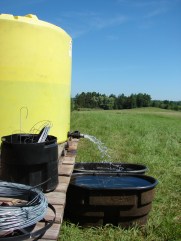
Our calves are pasture and hay-fed when they are young (for about 12 to 15 months.) Once moved to our finishing barn and pastures, they continue to be raised with no hormones and no fed antibiotics. Our finished beef are fed pasture, hay, haylage, and silage produced in the U.P. (for 6 to 8 months.)


We follow regenerative agriculture methods. Our small pastures provide us the ability to rotationally graze our herd throughout the seasons. This results in optimal feeding for the cows. It also allows the cows to monitor each other as a form of natural depredation control. Cows on our farm are always within a herd, in sight of other cows. We believe in good husbandry, and provide free access to barns for shade in the summer and protection from the elements in the winter.
Although there are many pasture management styles, we practice high stock density grazing with our cow-calf herd. Our current stocking density is between 275,000-350,000 pounds of cows per acre stocking density. We have a permanent perimeter fence that we move a portable poly-wire along twice or more every day throughout the grazing season. This allows us to feed the herd 1/4- 1/3 acre section of pasture each morning and evening. This method of pasture management positively affects the land, soil, crops, and cows. Despite our location in the UP, we are able to extend our grazing season into December.


We see our cows as one part of a complex ecological relationship between the land and animals. Livestock are only too happy to help out if the grazer’s management gives them the opportunity. They are capable of improving the land far more than any piece of equipment or bought soil amendments ever could. Strip grazing means that they spread their manure and urine in an even manner, fertilizing the land naturally. By moving the cows to a new section of pasture twice a day we ensure that they are ‘wasting’ grass by trampling it to the ground (gasp!) But, this is a GOOD thing, as our soil needs organic matter in the form of carbon. This in turn helps microbes in the soil!
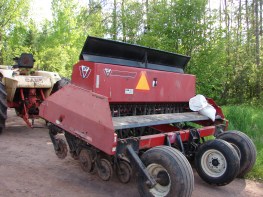
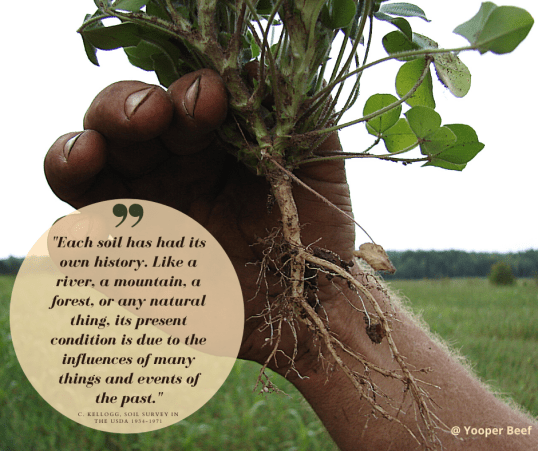
During the winter months, we unroll hay bales for our cows to eat in our woods and pastures, which helps build the organic matter in the soil. The hay has a lot of seeds in it that fall to the ground. The cows add manure fertilizer and good bacteria to the soil. It’s our way of naturally building grasslands and increasing biodiversity.


 yooper beef
You must be logged in to post a comment.